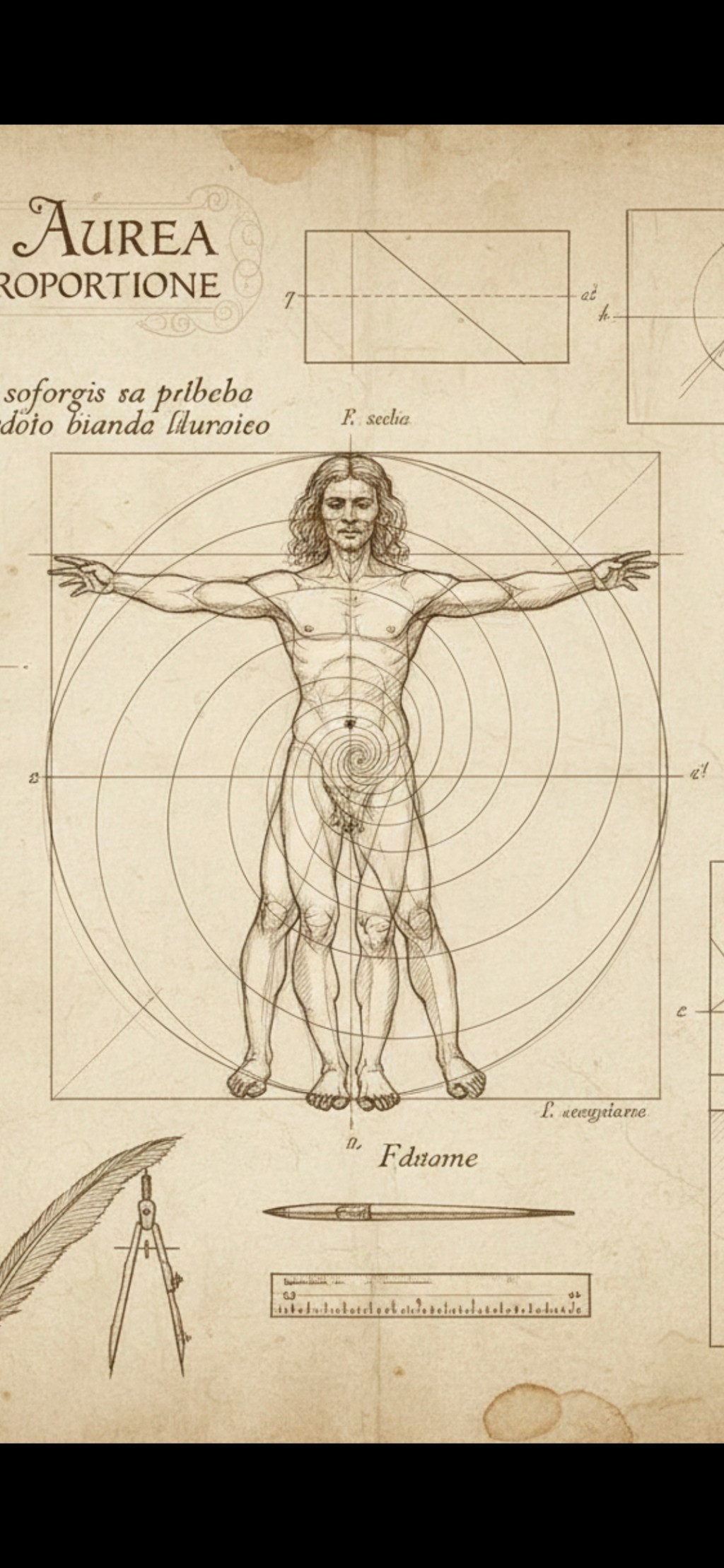
The conversation at the coffee table with friends Mahesh and Raju turned fascinating when we started discussing the secret behind the beauty in the world. One of the points raised was how Aishwarya Rai, known for her striking beauty, exemplifies the Miss World ideal. This naturally led us to the golden ratio, a mathematical concept often associated with beauty
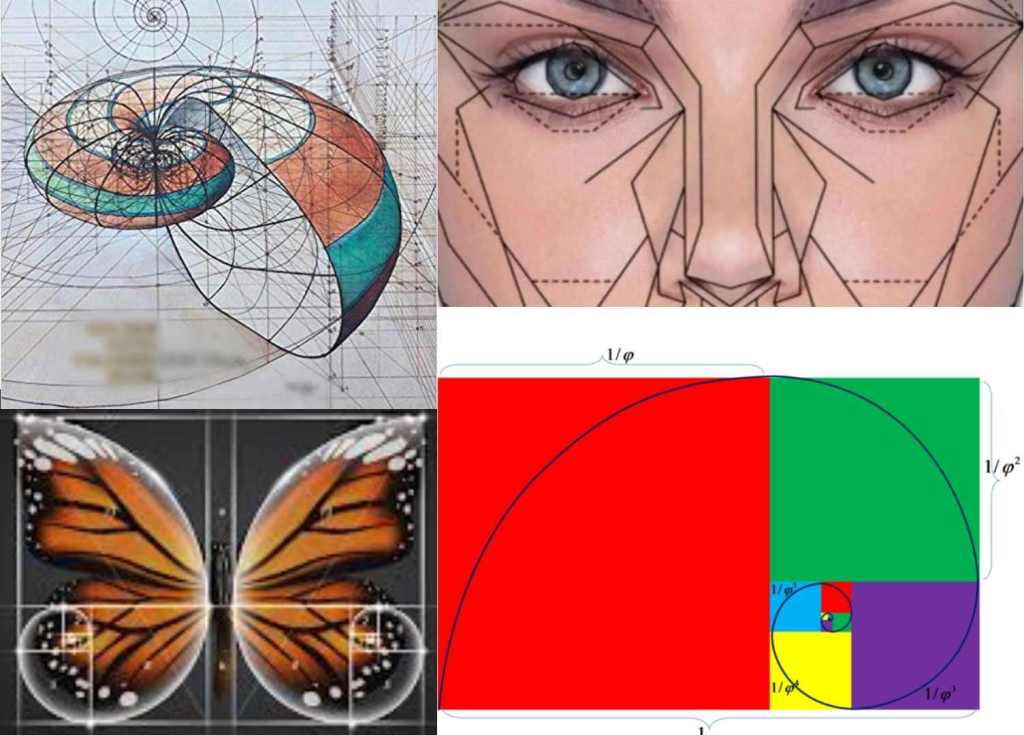
The golden ratio, approximately equal to 1.618, appears in various forms in nature, art, and architecture, suggesting that all beautiful things possess this unique ratio. Our debate extended to ancient mathematics and the contributions of Acharya Pingala, an Indian poet and mathematician from around 300 BCE, who had insights about the golden ratio.
Acharya Pingala wrote about a pattern of short and long syllables in Sanskrit poetry, which can be connected to what we now recognize as the Fibonacci sequence. This sequence, where each number is the sum of the two preceding ones, has intrigued mathematicians worldwide for centuries. The Fibonacci sequence starts as 0, 1, 1, 2, 3, 5, 8, and so on etc. As you progress through the sequence, the ratio of successive numbers approximates the golden ratio.
Interestingly, Hemachandra, another Indian scholar, wrote about the sequence 1, 1, 2, 3, 5,… a couple of hundred years before Fibonacci. Despite this, modern academia, often viewed from a European perspective, credits Fibonacci for this sequence. Thus, the term “Fibonacci number” is well-known, while “Hemachandra number” remains relatively obscure.
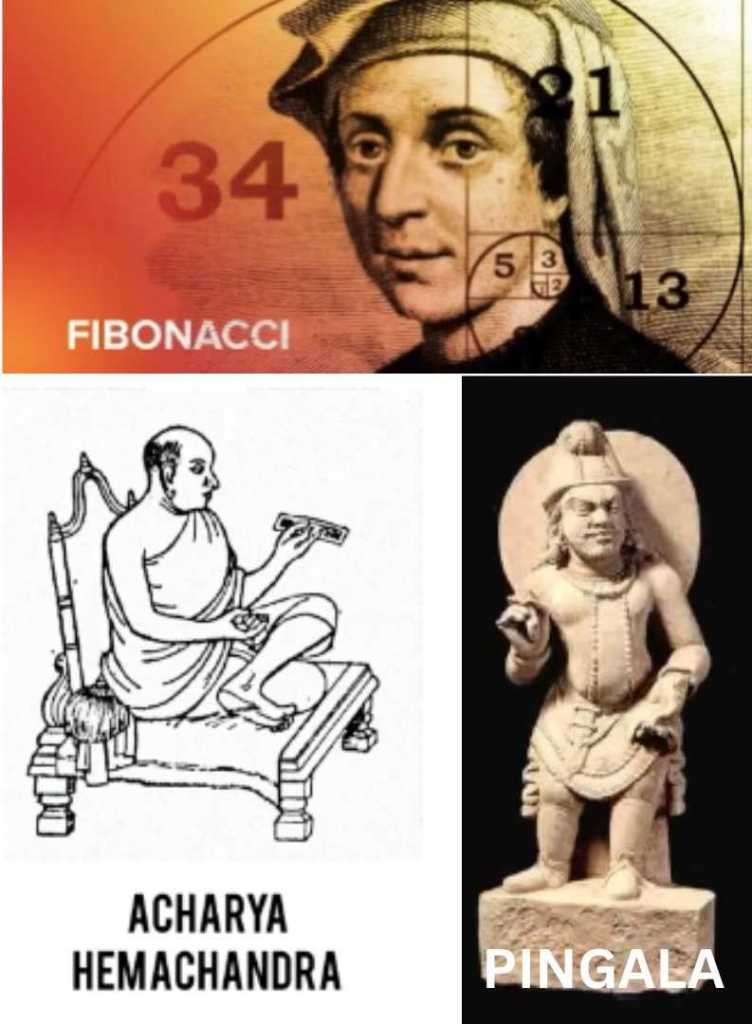
Leonardo of Pisa, known as Fibonacci, introduced this sequence to Western mathematics in his 1202 book “Liber Abaci.” Fibonacci’s work showed how the sequence applied to the growth patterns of various natural phenomena. As the numbers grow, the ratio of a number to its immediate predecessor converges to the golden ratio, creating a bridge between natural patterns and mathematical theory.
The golden ratio’s aesthetic appeal is evident in many works of art and architecture. The Parthenon in Greece, Leonardo da Vinci’s “Vitruvian Man, Monalisa”, and Salvador Dalí’s paintings are just a few examples of the golden ratio employed to create visually pleasing compositions. This ratio’s presence in these masterpieces highlights how ancient and modern artists and architects have tapped into this mathematical harmony to enhance beauty.
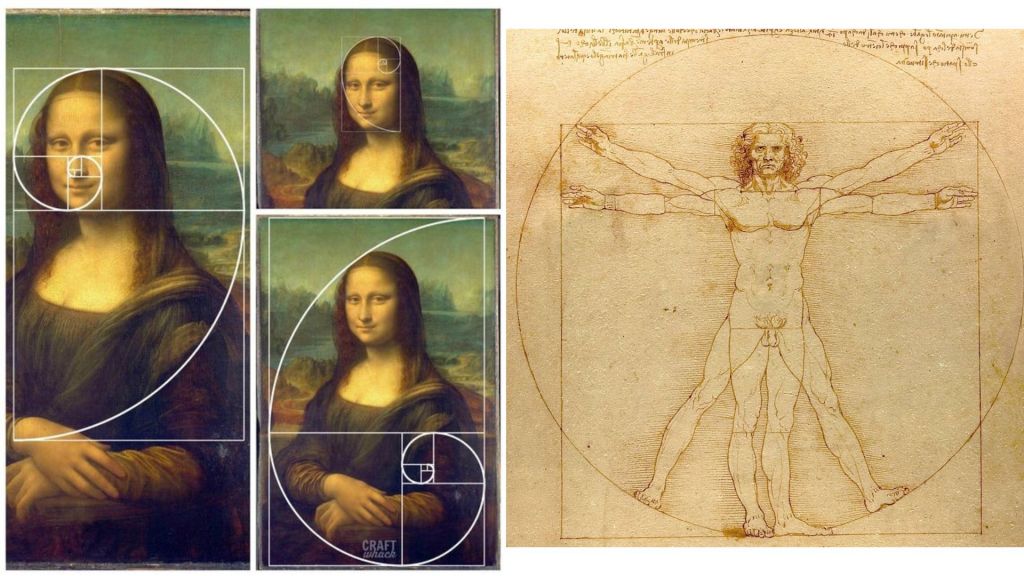
In addition to its artistic applications, the golden ratio appears in the human body. For instance, the ratio of the length of the forearm to the hand approximates the golden ratio, which may explain why specific body proportions are perceived as attractive. This intriguing intersection of mathematics and biology underscores the universal nature of the golden ratio.
Pingala’s work, Hemachandra’s sequence, Fibonacci’s contributions, and the golden ratio are interconnected threads in the tapestry of mathematical history. Though ancient, Pingala’s exploration of syllabic patterns aligns remarkably with Hemachandra’s and Fibonacci’s sequences. All these scholars, separated by centuries and geography, touched upon the same fundamental principles in their unique ways.
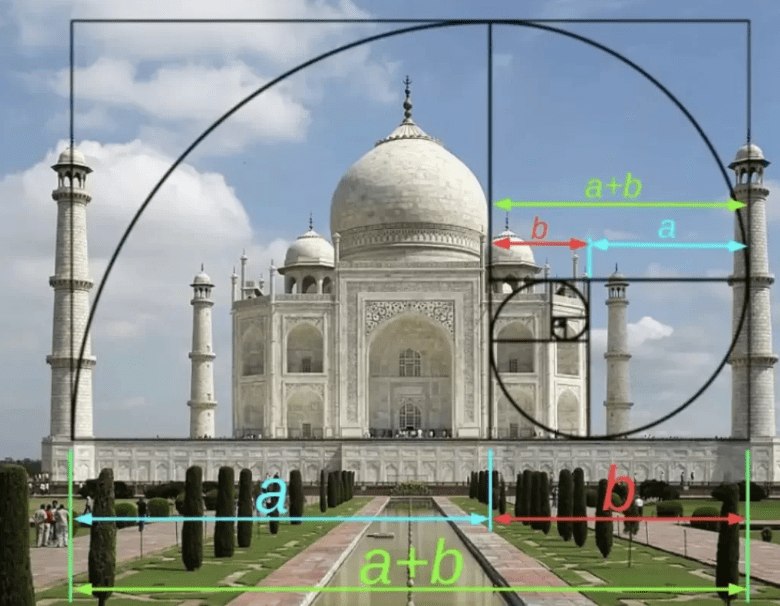
The influence of the golden ratio is also evident in Indian architecture, such as the Taj Mahal and various Indian temples. The Taj Mahal, with its symmetrically balanced proportions and harmonious design, embodies the golden ratio, contributing to its timeless beauty. Similarly, many ancient Indian temples incorporate the golden ratio in their structural layouts and intricate carvings, creating aesthetically pleasing and spiritually resonant spaces. These architectural marvels demonstrate the universal application of the golden ratio in achieving architectural perfection.
In addition to its artistic applications, the golden ratio appears in the human body. For instance, the ratio of the length of the forearm to the hand approximates the golden ratio, which may explain why certain body proportions are perceived as attractive. This intriguing intersection of mathematics and biology underscores the universal nature of the golden ratio.
The golden ratio is also relevant in modern technology and design. It is used to create aesthetically pleasing and functional websites, logos, and consumer products. This timeless principle continues to inspire and guide creators and innovators in the contemporary world.
In conclusion, the discussion among us at the coffee table revealed that great minds across different eras have converged on the concept of the golden ratio, each contributing uniquely to its understanding. Acharya Pingala, Hemachandra, Fibonacci, and the countless artists and architects who employed the golden ratio all recognized its intrinsic beauty. Their independent explorations, spread across time and space, collectively underscore the timeless and universal appeal of the golden ratio.
References and Bibliography
- Dunlap, Richard A. The Golden Ratio and Fibonacci Numbers. World Scientific, 1997.
- Livio, Mario. The Golden Ratio: The Story of Phi, the World’s Most Astonishing Number. Broadway Books, 2003.
- Ronan, Colin A. The Shorter Science and Civilisation in China: Volume 1. Cambridge University Press, 1978.
- Pingree, David. “The Fragments of Pingala’s Chandahśāstra.” Journal of the American Oriental Society, vol. 104, no. 3, 1984, pp. 257-264.
- Devlin, Keith. The Man of Numbers: Fibonacci’s Arithmetic Revolution. Walker & Company, 2011.
- Meisner, Gary W. The Golden Ratio: The Divine Beauty of Mathematics. Race Point Publishing, 2018.


 Heart Talks
Leave a comment