Celebrating the Guardians of Health: A Doctor’s Perspective on Doctor’s Day
A Heartfelt Start
Today, I was doing rounds after a cake celebration with the cardiology team in the hospital on Doctors Day. I finished my OPD and went into the ICU for rounds. The first patient I saw was an unstable patient with inotropes myocarditis. Despite his guarded prognosis, he prepared to wish me and shake hands, saying, “Happy Doctor’s Day, doctor,” with a smile. In that moment, I felt a mix of fear and responsibility. Moments like these remind me of the profound impact we have on our patients’ lives. We shared a brief but heartfelt conversation, reminiscing about the challenges he had overcome, before I continued my rounds.
The Metaphors of Healing
As doctors, we can see ourselves reflected in many aspects of nature. Just as a gardener nurtures plants, ensuring they grow healthy and strong, we tend to our patients, addressing their health needs with care and dedication. A bee’s role in pollinating flowers and maintaining the balance of the ecosystem mirrors our responsibility to maintain the population’s health.

A river sustains life by providing essential water and nutrients as we maintain our patients’ health and well-being. Teachers guide and shape their students’ futures, just as we provide knowledge and care to our patients, helping them navigate their health journeys. Finally, a lighthouse guiding ships through treacherous waters is akin to how we guide our patients through health challenges towards recovery.
Humility in Practice
In our practice, humility is paramount. As Spider-Man wisely said, “with great power comes great responsibility”. This power must be wielded with a deep sense of responsibility and humility. Our commitment to evidence-based medicine ensures that our treatments are grounded in the best available research and clinical expertise, always prioritising the patient’s benefit. If the treatment doesn’t benefit the patient, even if the intent is not to harm the patient, it still needs to be acknowledged.

The Evolution of Healthcare
Healthcare delivery has changed dramatically over time. We now see patients engaging in teleconsultations, often through their smartphones. This shift has made healthcare more accessible, especially for those in remote or underserved areas. Despite these advancements, the human element of healthcare remains crucial.
Many of us share our contact information with patients, intending to provide support beyond scheduled appointments. This practice underscores our commitment to being there for our patients, particularly the most vulnerable.

Shared Responsibility
The relationship between us and our patients is a shared responsibility. Both parties must uphold empathy and respect to create a meaningful and effective healthcare process. Empathy allows us to understand our patients’ experiences and needs, while respect fosters trust and collaboration.
Acknowledging Challenges
On Doctor’s Day, we celebrate not just our profession but also the virtues that make great doctors—humility, empathy, dedication, and a commitment to lifelong learning. These qualities enable us to provide the best care possible and maintain society’s trust.
Our profession has its challenges. The demands of the job, coupled with the emotional and physical toll it can take, make it a highly stressful career. Yet, despite these challenges, we remain steadfast in our mission to heal and support our patients.
The Impact of Misinformation and Online Interactions
In today’s digital age, patients and doctors often find themselves navigating a complex and contentious landscape online. Social media platforms and forums have become battlegrounds where a plethora of information—both accurate and dangerously misleading—competes for attention. The rise of quacks and false therapies, often promoted by charismatic figures with no medical credentials, has led to widespread misinformation that fuels mistrust. Patients, bombarded with conflicting advice and self-treatment opinions gleaned from internet searches(googling), can become skeptical of legitimate medical practices. This digital cacophony not only undermines the doctor-patient relationship but also poses significant risks to public health.

These challenges underscore the urgent need for improved communication and understanding between patients and healthcare providers. It’s crucial for doctors to engage with patients beyond the confines of the clinical setting, addressing concerns and dispelling myths in accessible and empathetic ways. Creating a more positive and constructive healthcare environment involves proactive measures: hosting educational webinars, participating in online health forums, and leveraging social media to share credible information. By fostering open dialogue and demonstrating empathy, healthcare providers can bridge the gap of understanding, building trust and encouraging informed health decisions.
Looking to the Future
As healthcare continues to evolve, so must our practices and approaches to patient care. Embracing new technologies such as telemedicine, artificial intelligence, and electronic health records can enhance the efficiency and accuracy of our services. However, technological advancement should not overshadow the human element of medicine. Continuing education is vital for doctors to stay abreast of the latest medical breakthroughs and treatment modalities. Equally important is maintaining a patient-centered approach that values empathy, listening, and personalized care. By integrating cutting-edge innovations with compassionate care, we can ensure that we provide the best possible outcomes in an ever-changing landscape.
Conclusion: A Day to Reflect and Honor
Doctors’ Day is a time for reflection and celebration of our invaluable contributions to society. It is a moment to honor our dedication, compassion, and tireless efforts in ensuring the health and well-being of our patients. National Doctors’ Day on July 1 was first celebrated in 1991 to pay tribute to Dr. Bidhan Chandra Roy, also known as B.C. Roy, the first chief minister of West Bengal. July 1 marks both his birth and death anniversary; he was born on July 1, 1882, in Patna and died on July 1, 1962, in erstwhile Calcutta at the age of 80.
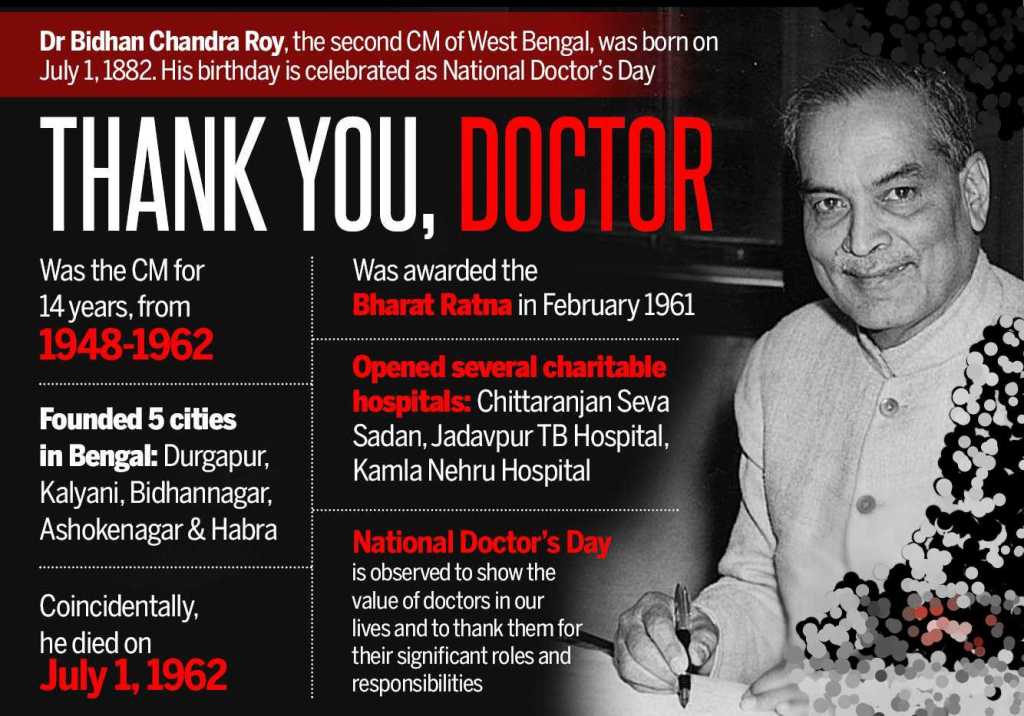
This day serves as a reminder of the profound impact we have on individual lives and the collective health of our communities. By celebrating Doctors’ Day, we acknowledge the essential role we play and reaffirm our commitment to supporting each other in our noble mission. This day is not just a recognition of our past achievements but a reaffirmation of our ongoing dedication to the future of medicine and patient care. In honoring Dr. B.C. Roy’s legacy, we celebrate the history of medical excellence and pledge to continue advancing the field with the same dedication and compassion.
References
- Smith, J. A. (2021). The Healing Power of Nature: Metaphors for Medicine. Medical Journal of Metaphors, 15(3), 45-58.
- Johnson, L. K. (2019). Telemedicine: Transforming Healthcare Delivery in India. Journal of Telehealth, 22(1), 112-125.
- Brown, R. (2020). Empathy in Medicine: The Essential Element. Journal of Compassionate Healthcare, 18(4), 334-348.
- White, S. H. (2018). The Evolution of Patient-Doctor Relationships. Journal of Medical Sociology, 24(2), 76-89.
- Green, P. A. (2022). The Future of Medicine: Embracing Change and Innovation. Medical Futures Journal, 30(1), 101-117.
Doctor’s Day is not just a celebration of our profession but a tribute to the principles of care, empathy, and unwavering commitment we embody daily. Let’s honour our role as guardians of health and continue to support each other in our journey to heal and nurture humanity.


 Heart Talks
Leave a comment