
My Journey Through Nature’s Symphony
Ruskin Bond’s Connection with Nature
Ruskin Bond, a celebrated Indian author known for his deep connection with nature, often writes about the natural world’s sounds with profound appreciation. His works reflect a keen observation and love for the environment, highlighting how natural sounds can offer a sense of peace and connection that modern life often lacks.
The Natural Symphony
In his writings, Bond frequently describes the natural world’s symphony of sounds. For instance, in Rain in the Mountains, he writes about the monsoon season in the hills, emphasizing how the rain brings life to the surroundings. He notes the “rhythmic drumming” of raindrops on the roof, the “chirping of crickets,” and the “croaking of frogs” as part of the natural orchestra that soothes and relaxes the soul. These sounds, Bond suggests, are not just background noise but are integral to the experience of being in nature, providing a profound sense of tranquility and peace.
My Experience in Coorg
On my recent trip to Coorg, I felt a deep connection with Bond’s descriptions. Driving in the rain with my usual friends, we shared all the world’s Gyan and gossip. The following week, we trekked in Kudremukh. In both places, I found ample time for myself. Away from phone calls and messages, it was a detoxification of sorts. This break from technology allowed me to fully immerse myself in the natural surroundings, enhancing my overall experience and deepening my sense of connection with nature.
The Sounds of Night in Coorg
At Coorg, when it got dark, we went to a homestay on Siddapura Road close to Madikeri. The stay was unremarkable, but the environment around us was pitch dark. Sounds of raindrops were all around us, accompanied by an orchestra of insect sounds and frogs croaking. The rain and thunder added another layer to the natural soundtrack, creating a powerful auditory experience. It was akin to listening to a thunderstorm in the comfort of your living room but amplified by the rawness of being in the wilderness.

We also had a small campfire with the sounds of wood burning, crackling and popping like a comforting song, simmering as we had dinner. The campfire was like an old friend, whispering stories as the flames danced and flickered. These natural sounds created a symphony that, as Bond would say, spoke to my soul and offered a form of detoxification from the incessant hum of technology and urban life. Bond’s reflections on nature often highlight how such experiences can bring inner peace and mindfulness, allowing one to fully immerse in the present moment.

Auditory Experiences in Kudremukh
During the trek in Kudremukh, I had another fascinating auditory experience. As we descended from the peak, I heard what sounded like Clint Eastwood’s music from The Good, the Bad, and the Ugly. The background score resembled someone whistling. I don’t know if others heard it the same way, but it was magical. Unfortunately, I couldn’t record it because it was windy and rainy. Likely, it was the wind rustling through the woods and sweeping across the grassy plains, tearing through the blades of grass.
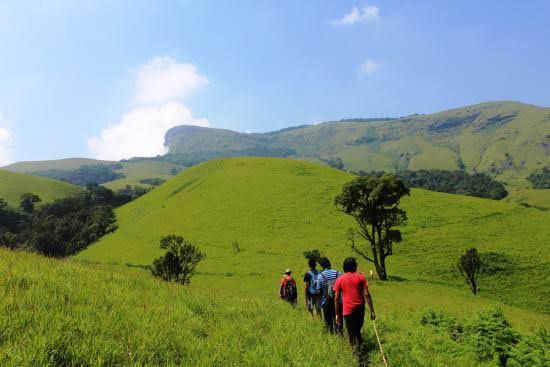
The sounds of the forest were ever-present as I lagged behind my friends, mainly trekking alone. The guide had made me cautious about covering the 18-kilometer distance. I could hear the rustling of leaves and the distant calls of animals, creating an immersive and almost surreal experience. It felt as though the forest itself was communicating with me, each sound a part of the larger symphony of nature.
As I walked through the rain-soaked trails of Kudremukh, the sound of my footsteps merging with the natural orchestra around me, I felt an overwhelming sense of peace. It was a reminder of the world’s beauty and the intricate web of life that exists just beyond the reach of our hectic schedules. Each sound told a story, a narrative of survival, communication, and the perpetual dance of life.
The Science of Natural Sounds
The sounds produced by frogs, crickets, birds, and other insects during the monsoon season are part of their communication and survival mechanisms. Frogs call to attract mates and establish territory, using their vocal sacs to amplify their calls. Crickets chirp to signal their availability to females and ward off other males by rubbing their wings together in a process called stridulation. Birds sing to attract mates, establish territories, and communicate using their syrinx, a vocal organ at the base of their trachea. Cicadas and katydids produce sounds by vibrating membranes or rubbing wings or legs together. The increased humidity and temperature during the monsoon create an ideal environment for these species to become more active, leading to increased vocalization that travels better in moist air, making calls more effective in attracting mates and communicating over longer distances.
Reflections on Solitude in Nature
In Walden, Henry David Thoreau echoes this sentiment: “I love to be alone. I never found the companion that was so companionable as solitude.” My solitude in the wilderness allowed me to connect deeply with the natural world around me.
In A Sand County Almanac, Aldo Leopold beautifully captures this connection with nature: “There are some who can live without wild things and some who cannot.” My time in Coorg and Kudremukh reaffirmed my need for these wild experiences.
In The Mountains of California, John Muir shares a similar reverence: “In every walk with nature, one receives far more than he seeks.” Muir described that my journey through the forests and hills brought unexpected joy and profound peace.
Conclusion
Bond’s reflections on the sounds of nature encapsulate the essence of finding tranquillity and a deeper connection with oneself through the simple yet profound experiences that the natural world offers. My recent experiences in Coorg and Kudremukh resonate with Bond’s views, underscoring the rejuvenating power of nature’s symphony. These experiences reaffirmed my belief in the healing and calming effects of nature, leaving me feeling refreshed and invigorated.
References
- Bond, Ruskin. Rain in the Mountains: Notes from the Himalayas. Penguin India, 1993.
- Bond, Ruskin. The Night Train at Deoli and Other Stories. Penguin India, 1988.
- Thoreau, Henry David. Walden; or, Life in the Woods. Ticknor and Fields, 1854.
- Leopold, Aldo. A Sand County Almanac. Oxford University Press, 1949.
- Muir, John. The Mountains of California. Century, 1894.


 Heart Talks
Leave a comment