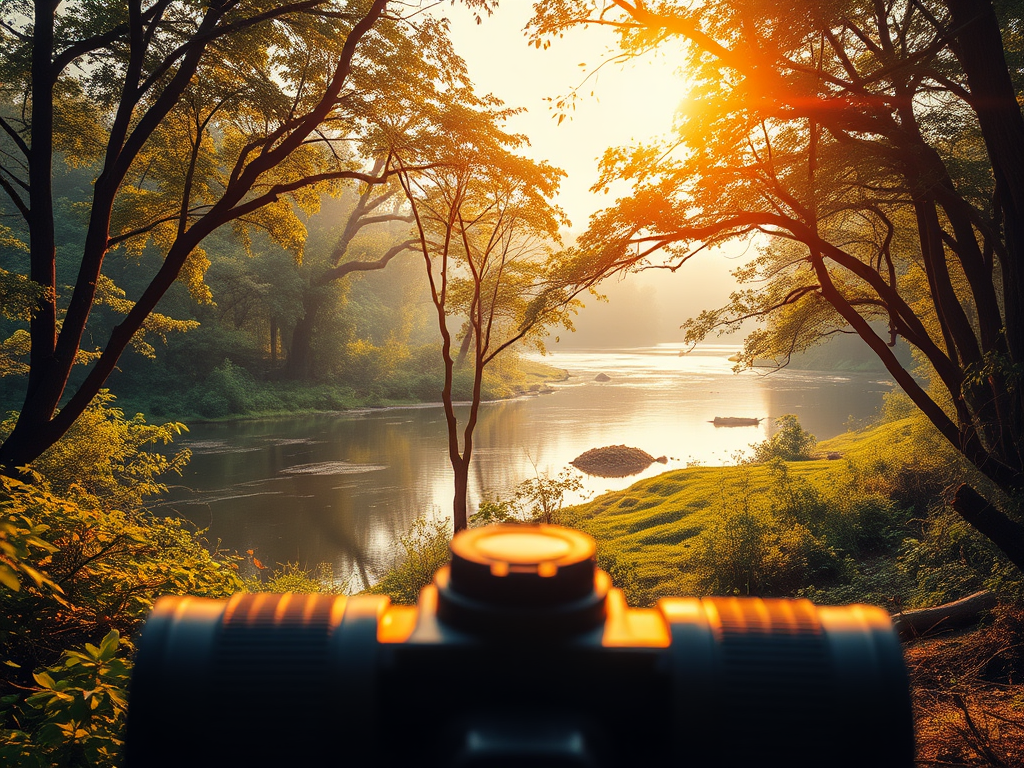
Last weekend, I found myself questioning my life choices. After a late-night function, my brain felt like overcooked bisi bele bath, but the call of the wild (and a very persistent Tabrez) was louder than my craving for sleep.
We were headed to Bhimeshwari, a place I hadn’t visited in twenty years. Back then, it was all about the fish; this time, we were trading fishing rods for high-speed shutters.
The Great Escape
We flagged off from our “official” starting line—the Shell Petrol Bunk at Sadashivanagar. By 12:00 PM, we were off. I was battling a “stomach on toss” situation (thanks, party food!), Raju was nursing mental fatigue from a week of travel, and then there was Tabrez.
Tabrez is the kind of guy who doesn’t just “go” on a trip; he launches a mission. He refused to hop into any other car because he needed his “armoury” (his massive camera lenses) exactly where he wanted them.
Traveler’s Tip: The drive takes about 2 to 2.5 hours via Kanakapura Road. While the road is mostly smooth, Watch out for the “007 Bond” travellers. These people use “gadgets” (mostly groundnuts and snacks) to lure monkeys onto the road for photos. This turns the highway into a dangerous primate obstacle course, forcing every other vehicle to slow down and be extremely cautious. It’s bad for the monkeys and worse for the traffic!. Please don’t feed the wildlife; it ruins their natural hunting instincts and leads to accidents!
Arrival at the Jungle Lodges
As we swapped the city’s huzle and buzle for the whispers of the Cauvery, we reached the Jungle Lodges (JLR) property. We were greeted by Thomaraj, a gentleman in his 50s with the quiet confidence of a man who knows every leaf in the forest. He had “Army discipline”—we had exactly 35 minutes to freshen up and eat before the “bird shooting” (with cameras, of course) began.
We marched toward the Gol Ghar—the classic circular open-air dining hall found in JLR properties. As we walked in, the entire room went silent.
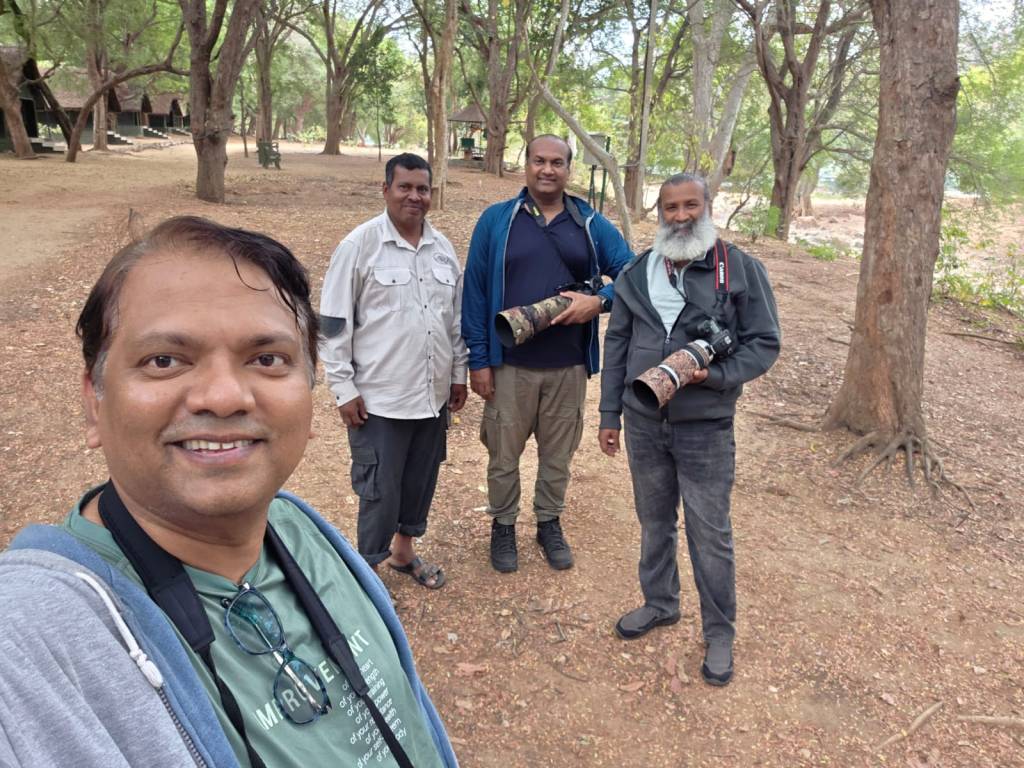
Now, I’m used to Raju getting stares because his prominent beard makes him look like a mix between a Telugu superstar and Sadhguru. But this time, it was the three of us, draped in heavy binoculars and massive lenses, looking like a tactical unit. People come here for “recreation,” but we looked like we were on a National Geographic contract.
My lunch was a tactical strike:
- Rasam Rice (The ultimate stomach healer)
- Curd Rice (The coolant)
- Fried Fish (When in Rome…)
- Dal Payasam (The sweet victory)
Knowledge Corner: The Bhimeshwari Ecosystem
| Feature | Details |
| The River | The mighty Cauvery (Kaveri), which provides a lush riparian habitat. |
| Topography | Dry deciduous forests mixed with scrub jungle, ideal for diverse bird species. |
| Star Attraction | Historically famous for the Mahseer fish, but now a top-tier birding destination. |
| Local Craft | The Coracle (Teppa): A circular boat made of bamboo and hide, perfect for stealthy bird watching. |
Into the Teppa
With our stomachs full and hearts hopeful, we met our “Commanding Officer” Thomaraj by the riverbank. He was waiting with the Teppa (coracle). Getting into a round boat with expensive gear is always a “balancing act,” but once you’re on the water, the world changes.
Raju and Tabrez were already scanning the canopy, their cameras ready to “tweet” in a way Twitter never could. The adventure had officially begun, and honestly, it was egg-cellent so far.
As we wobbled into the Teppa, I noticed this wasn’t the traditional “sit on the floor and hope you don’t get wet” version. This was a “pro” model, with fabricated seats facing different directions—perfect for 360-degree photography.
Thomaraj, our silent captain, began paddling with such grace that the old Kannada song “Doni sagali, munde hogali” (Let the boat move forward) started playing in my head. The Kaveri was calm, moving with the kind of patience I wish I had in the hospital.
The Birding Orchestra
Then, the “encyclopedia” opened. Thomaraj started rattling off names that sounded like Greek to me, but he spoke with the rhythm of a tribal chief.
- The Sniper: He pointed to a dried tree on the far bank. “Grey-headed Fish Eagle,” he whispered. Through my binoculars, it looked majestic—a true “feathered king.” Meanwhile, Raju and Tabrez swung their “bazooka” lenses around like they were in a Hollywood action flick. Click-click-click!
- The Fighter Jets: We saw Greater Cormorants skimming the water. They don’t just fly; they fly low and fast, like fighter jets on a stealth mission, barely touching the surface.
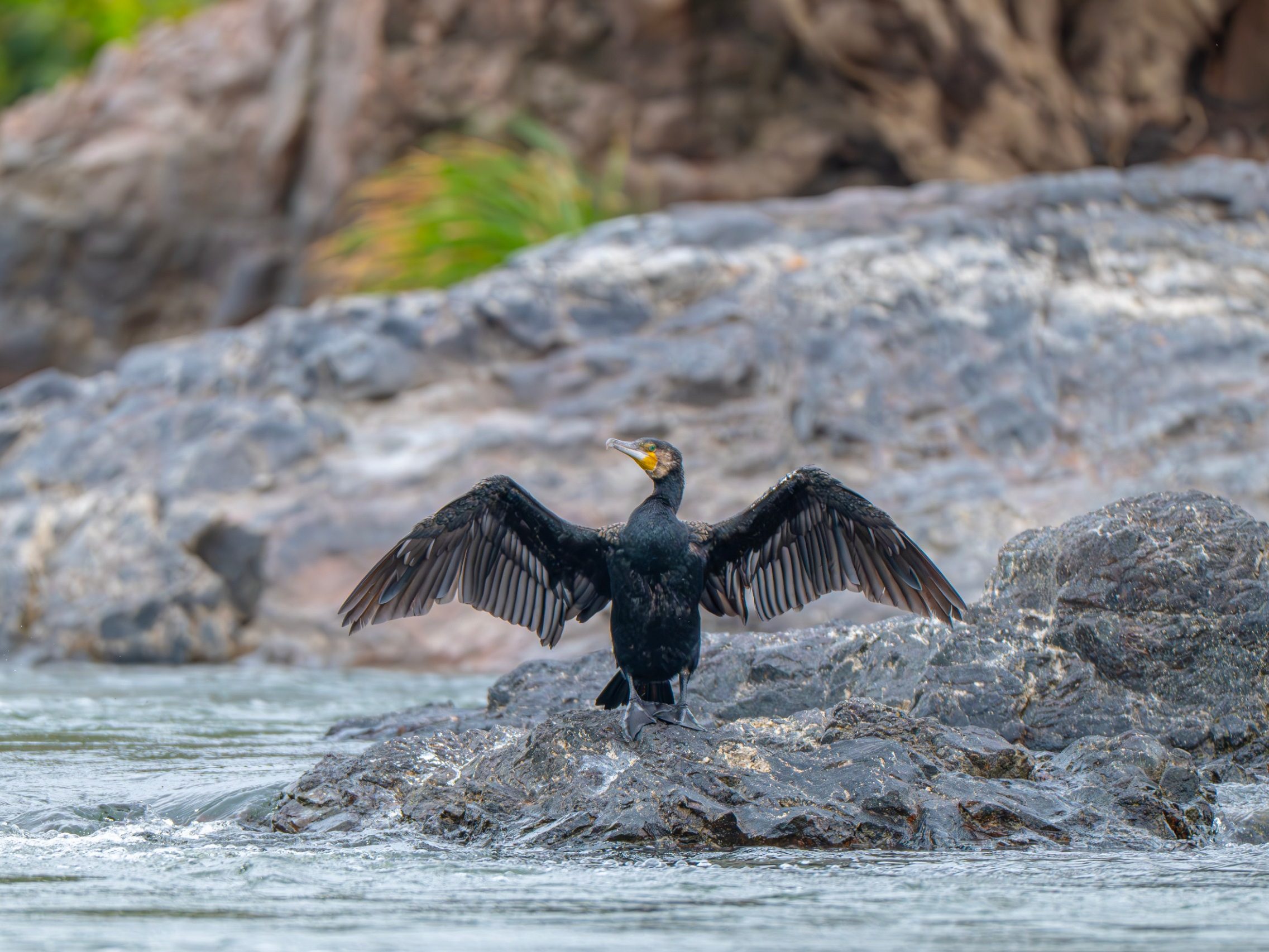
- The Illusionist: Suddenly, a “snake” appeared to rise from the water. I almost jumped out of my seat, but it was just the Oriental Darter (Snakebird). It swims with its body submerged, leaving only its long, slender neck visible—a real “head-turner.”
I realized then that bird watching is a full-body workout for the senses. You don’t just use your eyes; you have to tune your ears to the “orchestra” of the forest. Amidst the chirps and whistles, you have to identify which “instrument” is playing.
Nature’s Note: The Oriental Darter is a master diver. Unlike most water birds, it doesn’t have much oil on its feathers, which helps it sink and hunt underwater. However, it has to spend a lot of time “sun-bathing” with its wings spread out to dry off afterward!
The Kingfisher Collection
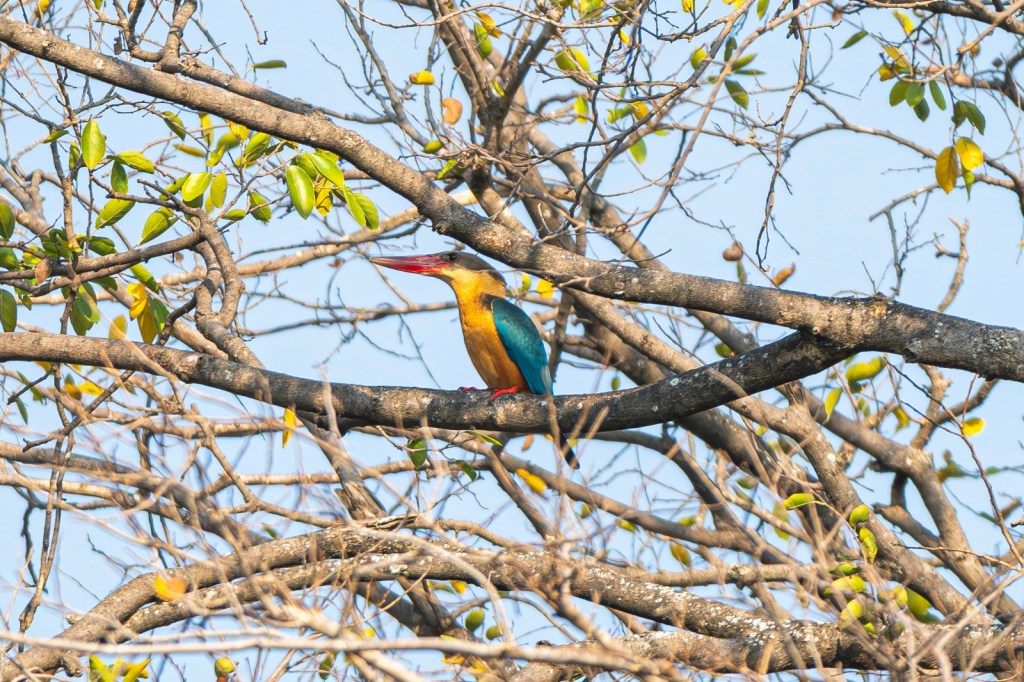
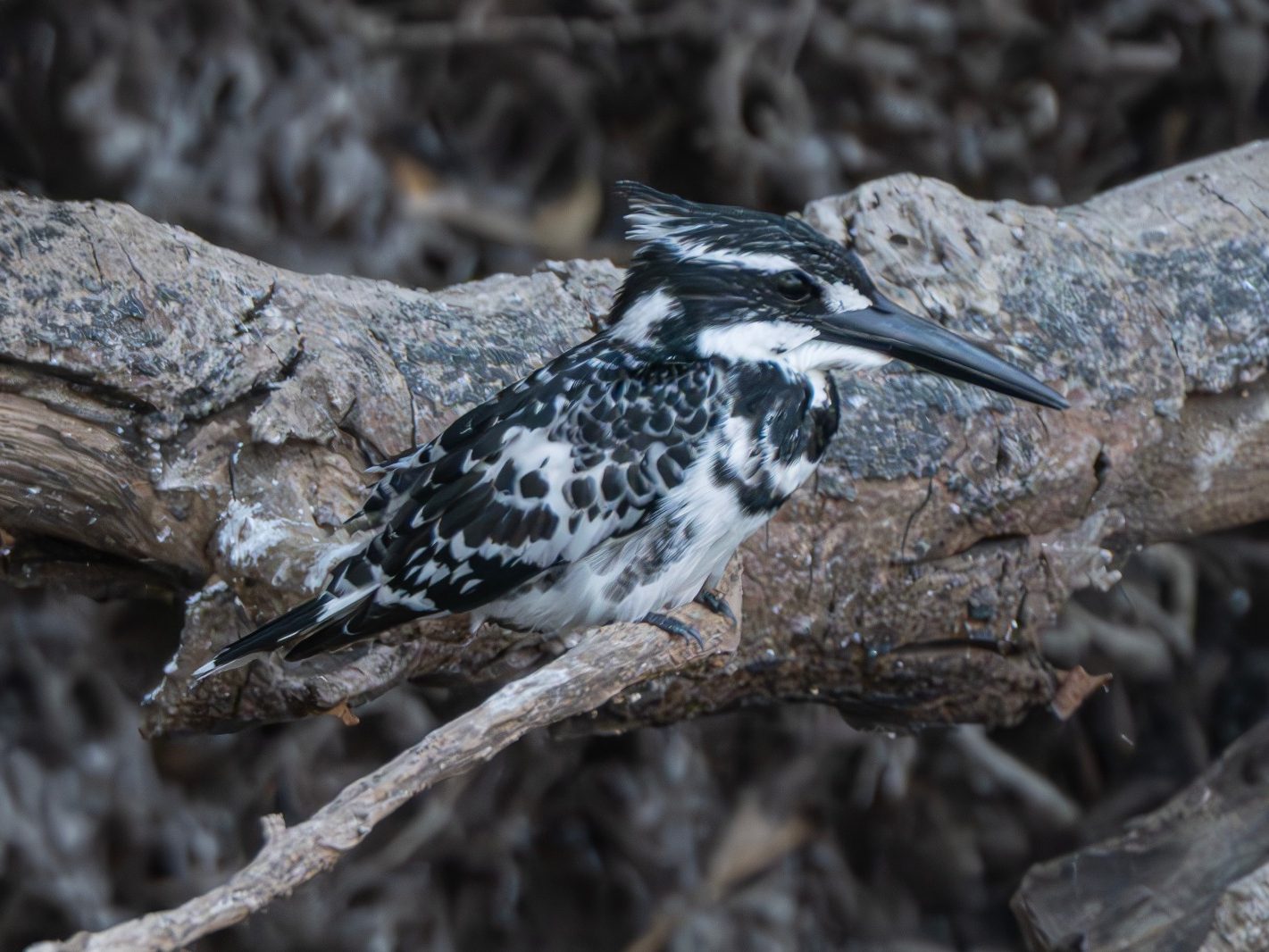
Bhimeshwari seems to be the headquarters for Kingfishers. We spotted them everywhere, like colorful gems hidden in the reeds:
| Bird | Personality |
| Pied Kingfisher | The hovering specialist. It hangs in the air like a helicopter before diving. |
| White-throated Kingfisher | The bold one with the chocolate-brown chest and neon-blue back. |
| Blue-eared Kingfisher | The shy, tiny jewel—blink and you’ll miss him! |
We even saw their nests—deep burrows carved into the mud banks. Every now and then, a tiny “tweet” would drift out from the holes, the “birdlings” demanding their evening snacks.
A Little Birdie Told Me… (Puns intended)
Honestly, being with Raju and Tabrez made me realize I’m a bit of a “bird-brain” when it comes to technical names, but I was starting to get the hang of it. Our “Commanding Officer” Thomaraj was definitely the wing-man we needed.
Just as we were admiring the feathers and the “tweet-hearts” of the forest, the water got a lot more interesting—and a lot more terrifying. In the middle of the river, I saw what looked like stone idols or dolls resting on the rocks.
“Look at those carvings,” I thought. Then one blinked.
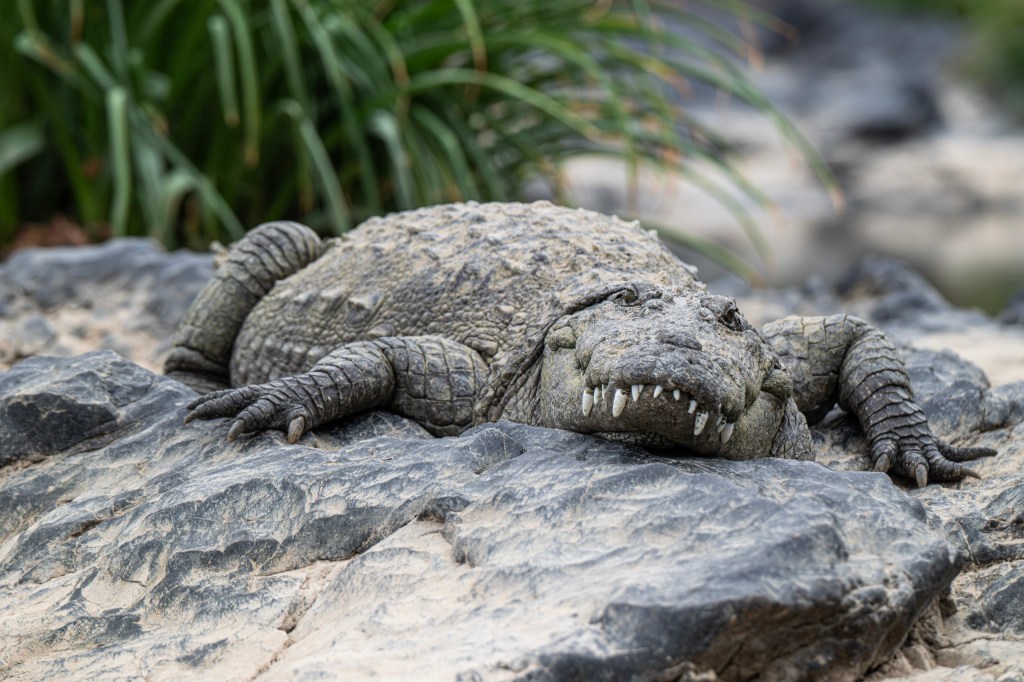
They weren’t statues; they were Mugger Crocodiles (often called alligators by locals) basking in the sun with full stomachs. The moment one slid into the water with a silent splash, the “Hollywood” vibes shifted from The Lion King to Jaws.
The “Snap” of Reality
Thomraj, ever the storyteller, started sharing “Crocodile Chronicles” that made our hair stand on end. He described how they hunt—the “death roll” where they spin to take their share, followed by a feeding frenzy from the rest of the pack.
Safety First: We saw people downstream dipping their children in the water or sitting on rocks with their feet dangling in. It was a “jaw-dropping” sight—and not in a good way. They have no idea that these camouflaged predators are nearby. Remember: In the Kaveri, if the water is still, don’t assume it’s empty!
Rapids and “River Sharks”
As Tabrez and Raju chased a mysterious bird call into the thickets, Thomraj paddled us toward a sound like distant thunder. He called them Rapids—where the water dances and crashes over hidden rocks.
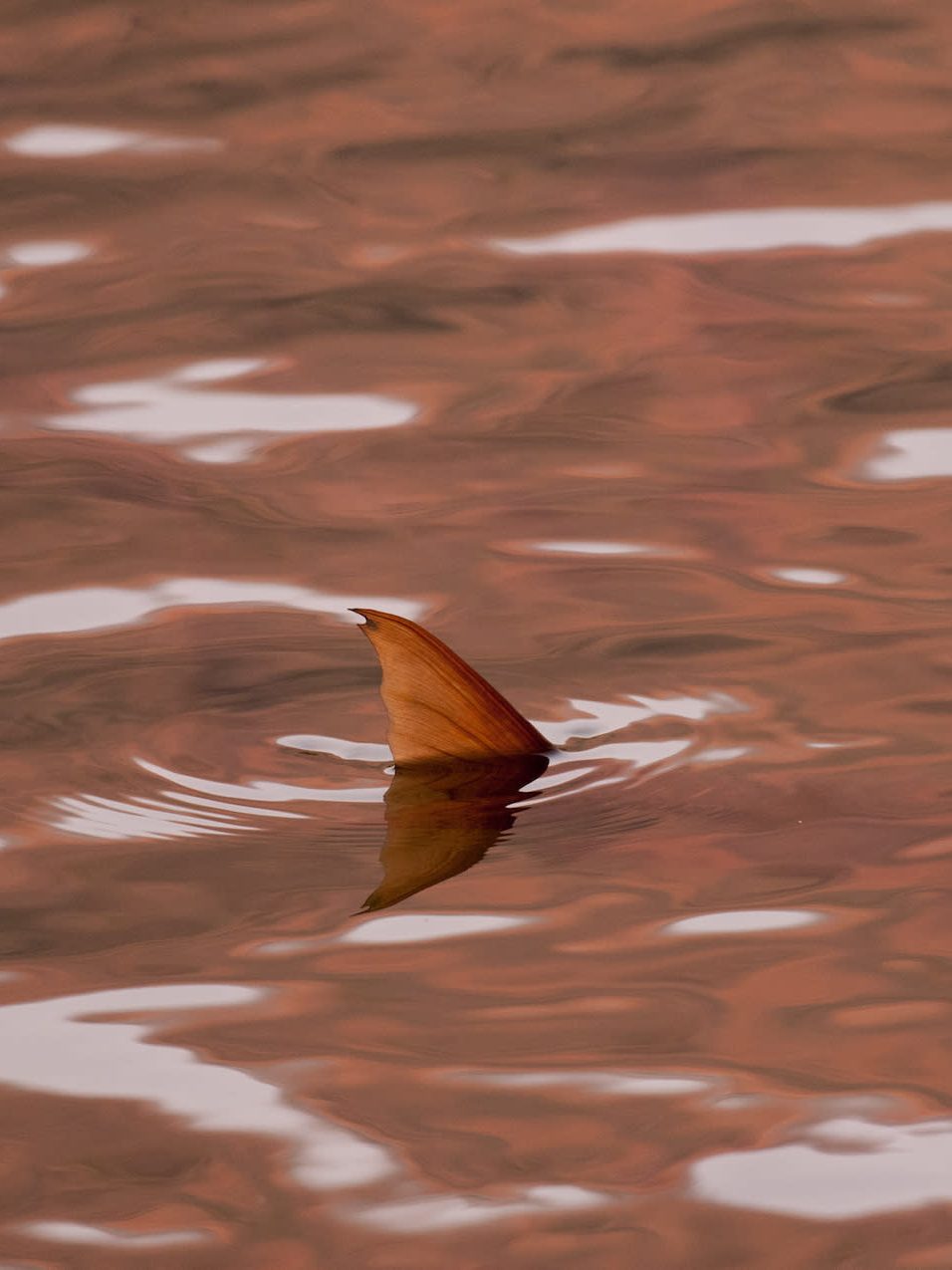
Nearby, the water seemed to “boil” with fins. For a second, I thought we were seeing small sharks.
“Mahseer!” Thomraj whispered.
These are the legendary hump-backed Mahseer, the kings of the Kaveri. Seeing their fins cutting through the water in a “mating dance” was incredible. Back when I visited 20 years ago, fishing was the main draw here, but now, it’s a protected sanctuary. No more hooks; just looks!
Courtesy: Joshua Barton
Knowledge Corner: The Kaveri Giants
| Species | Fact |
| Mugger Crocodile | A “hole-nesting” species that can grow up to 13-15 feet. They are masters of staying still for hours. |
| Hump-backed Mahseer | Known as the “Tiger of the Water.” They are critically endangered and Bhimeshwari is one of their last strongholds. |
| The Ecosystem | The presence of both apex predators (crocs) and large fish (Mahseer) indicates a very healthy river system. |
Landing the Craft
While Thomraj checked in with some Forest Department officers who were busy repairing a submersible motor (forest life isn’t all birds and bees; there’s a lot of plumbing too!), we made our way back to the shore.
Our “sea-legs” were a bit shaky as we stepped out of the Teppa near the resort, but we weren’t done yet. The sun was still up, and the forest floor was calling. We traded our life jackets for walking shoes, ready to see what the trees were hiding.
It was getting late, and the sun began to dip, casting a golden “filter” over the river that no Instagram setting could ever match.
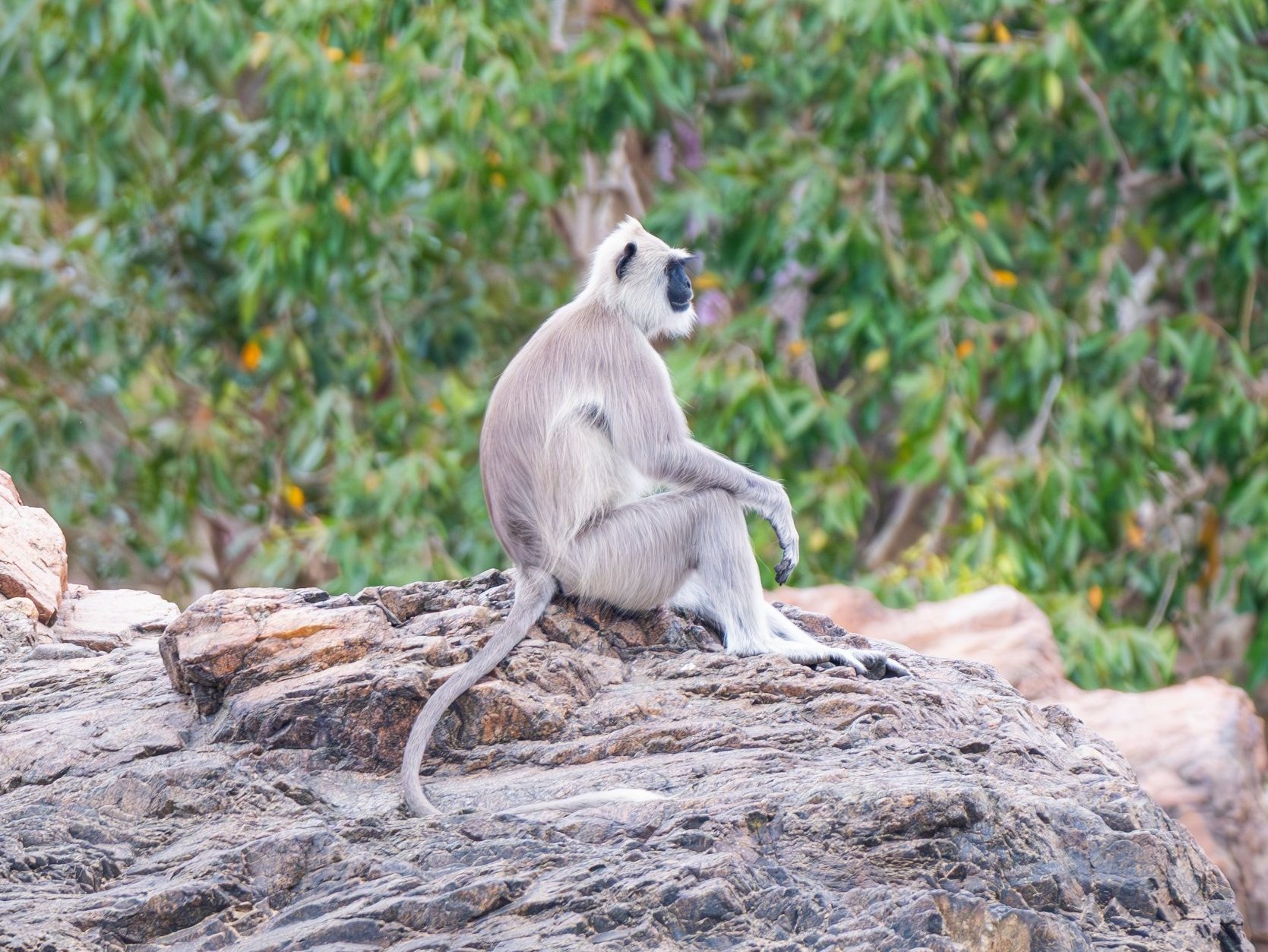
After the river adventure, we swapped our “sea legs” for hiking boots and set off into the forest. Right at the edge of the bank, we spotted a Hanuman Langur sitting in a pose so contemplative it looked like Michelangelo’s Thinking Man.
He was perched all alone, chin on hand, staring into the distance. We joked that he was probably stressed about his “family problems” or perhaps the rising cost of bananas. Whatever it was, he looked like he was carrying the weight of the jungle on his shoulders.
The Ground Force
As we walked deeper, the “clean-up crew”—a troop of Rhesus Macaques—took over. They were busy scraping the ground and wiping their hands with a focused intensity.
Eco-Insight: Raju was fascinated by their “habits,” but there’s a method to the mess! By scraping the earth and discarding pits or rinds, these monkeys act as the forest’s natural gardeners. This seed dispersal ensures that the next generation of trees gets planted exactly where it needs to be.
The Forest Soloists
While the monkeys handled the ground, the trees were alive with “solo performances.” Thomraj and Tabrez were in their element, spotting birds that looked like they had been painted by a master artist.
We encountered a few stars of the scrub:
- Tickell’s Blue Flycatcher: Named after the famous ornithologist Samuel Tickell (not because he likes to tickle!). This bird is a stunning metallic blue with an orange throat.
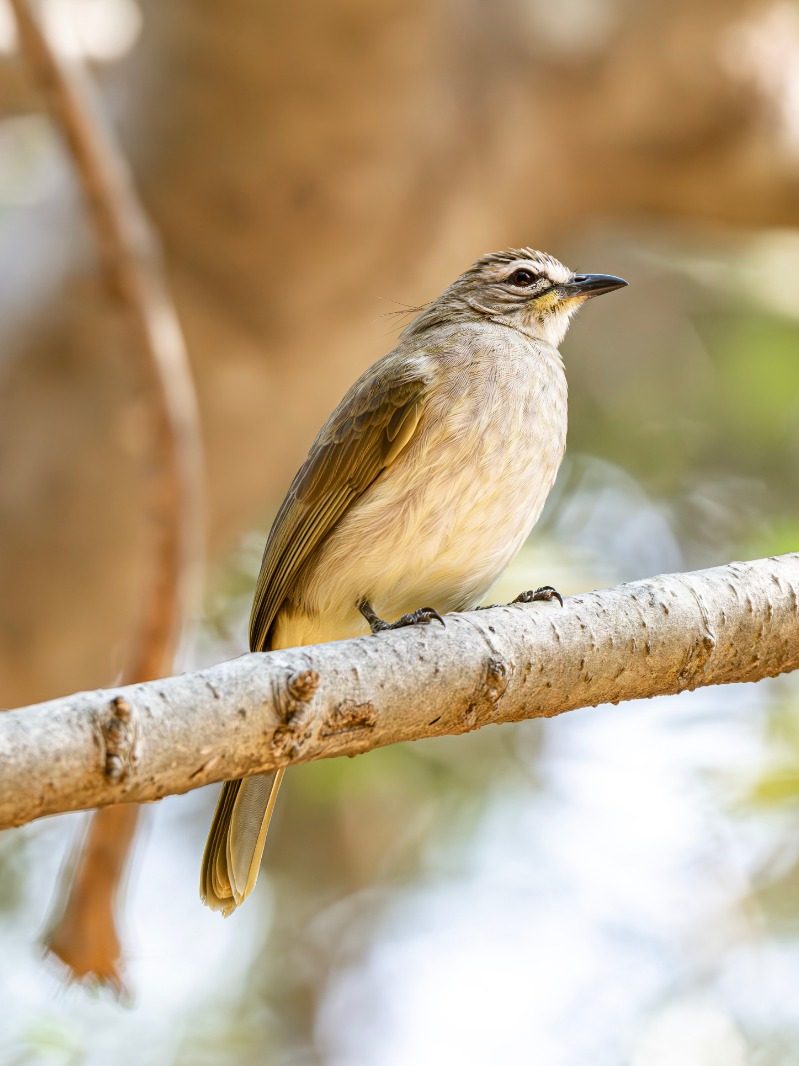
- White-browed Bulbul: A shy singer with distinct white “eyebrows.” It doesn’t like the spotlight as much as its cousins.
- Blue-bearded Bee-eater: This was the showstopper. It has a magnificent “beard” of long blue feathers and a bright cap. It sits perfectly still until an unlucky bee flies by—then it’s game over.
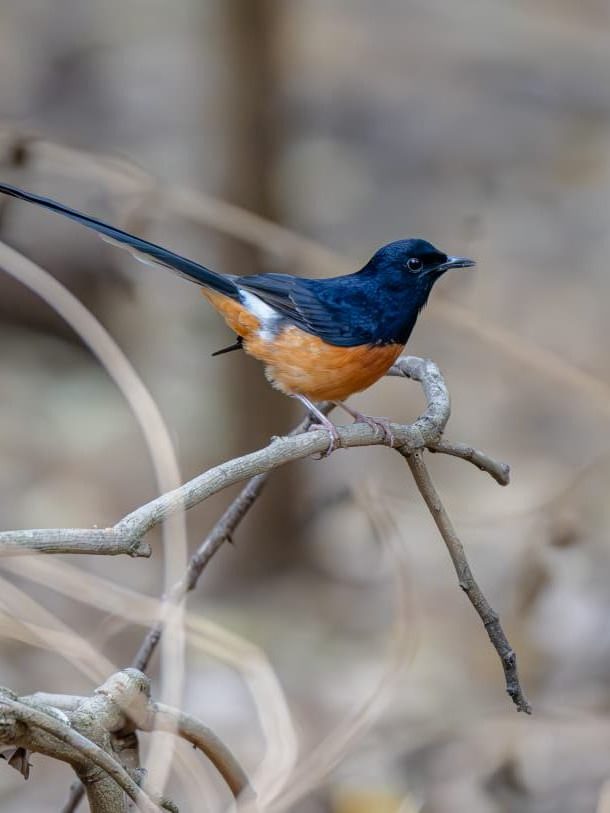
- White-rumped Shama: Known as one of the best songbirds in the forest. Its melody is so complex it makes a professional violinist look like an amateur.
The Birding Vocabulary (Greek to Me!)
| Bird Name | Why it’s Special |
| Flycatcher | These guys are the “acrobats,” catching insects mid-air with a sharp snap of the beak. |
| Bee-eater | They actually rub bees against a branch to remove the stinger before eating them. Smart birds! |
| Shama | A master mimic. They can learn the songs of other birds to protect their territory. |
Wrapping up the “Mission”
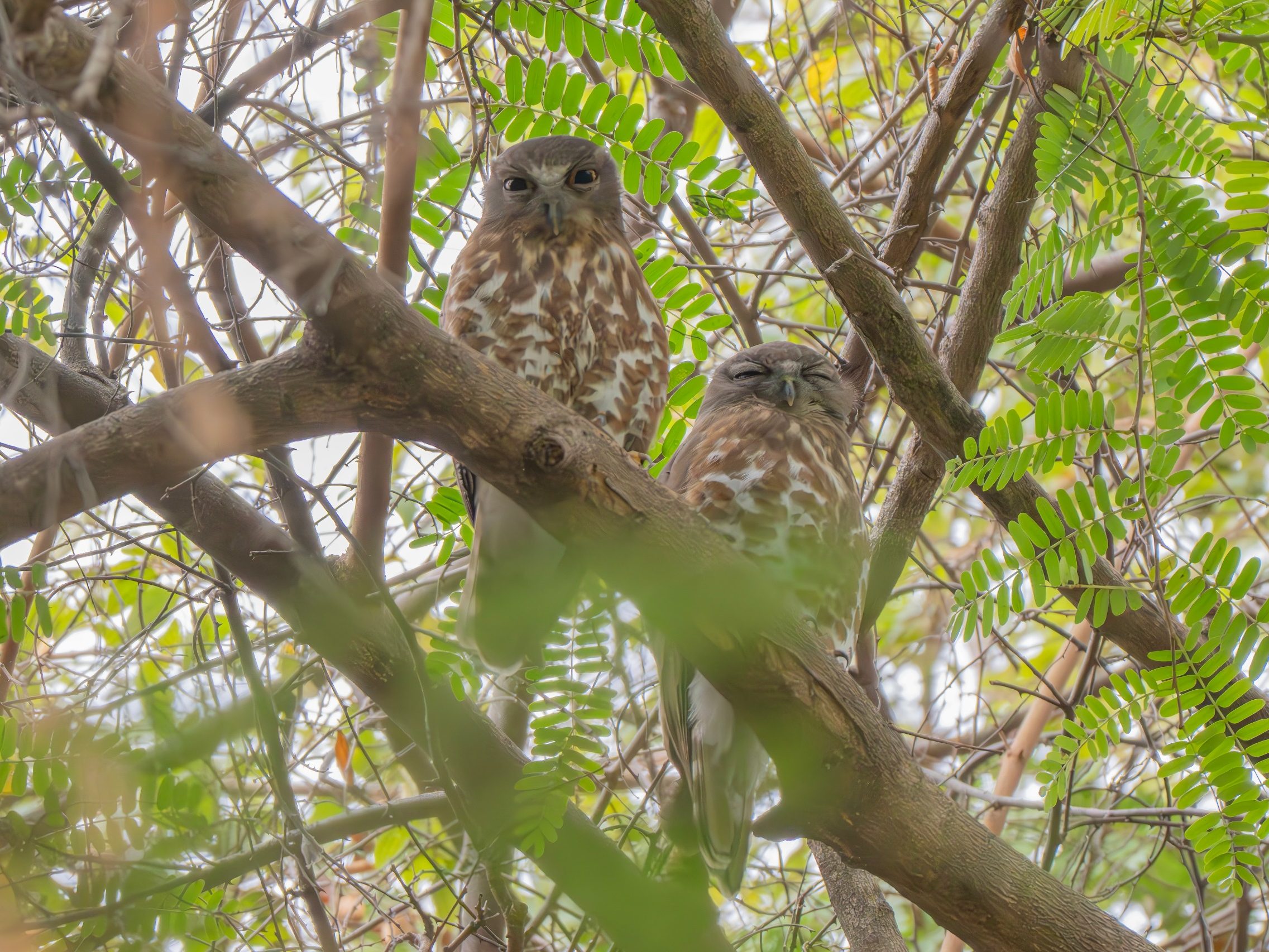
Just when we thought the “mission” was ending, Thomraj signaled us to freeze. High up in the canopy, perched like the supreme judges of the forest, was a pair of Owls.
It felt like the roles had reversed; they were perched perfectly still, staring down at us with huge, unblinking eyes as if they were the photographers and we were the rare specimens. Thomraj pointed out the subtle “dress code” of the forest: the male had prominent brown markings on his breast, while the female sat nearby, guarding their nest.
The Grand Finale: A Splash of Color
As we took our final few steps toward the resort, the forest decided to give us a “standing ovation.” We hit a lucky streak of sightings that had Raju and Tabrez’s cameras working overtime:
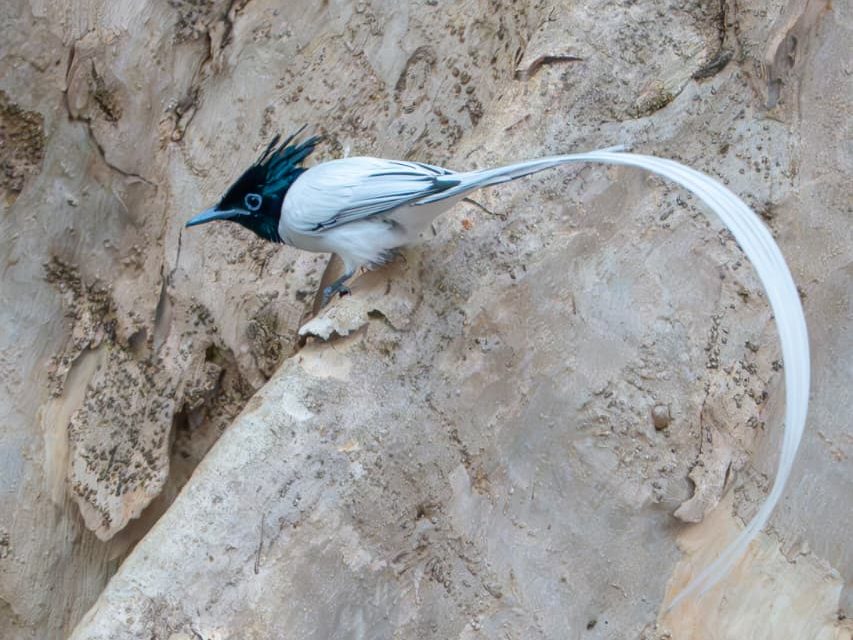
- Indian Paradise Flycatcher: The “ribbon bird.” Seeing the male with his long, white streamers trailing behind him in flight is like seeing a ghost in the woods.
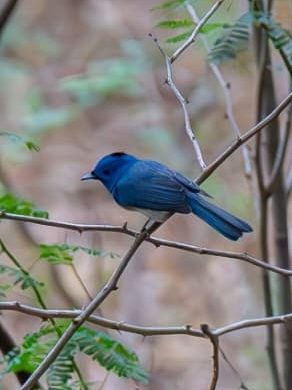
- Black-naped Monarch: A stunning azure-blue bird. I couldn’t help but laugh when I saw the black patch on the back of its head—it looked exactly like a Brahmin’s juttu (traditional tuft of hair).
- White-bellied Drongo: The bird with the “forked tail” that looks like it’s wearing a tuxedo.
- Yellow-footed Green Pigeon: The state bird of Maharashtra, but clearly enjoying the Karnataka hospitality. They are so well-camouflaged that if they don’t move, you’d think they were just another bunch of leaves.
As Tabrez finally nailed the shot, he shared a bit of forest wisdom: He explained that while the female bathes normally, the male Paradise Flycatcher only performs a high-speed “surface-dip.”
He also pointed out that many of our sightings were global travelers. It was humbling to realize that while we struggled with a 2-hour drive from Bangalore, birds like the Grey Plover fly over 7,000 km from the Arctic just to winter at the Kaveri. In the jungle, every “dip” and every flight is a calculated move for survival.
| Bird | Migration Status | Origin |
| Grey Plover | Winter Migrant | Arctic Tundra / Siberia |
| Indian Cuckoo | Summer/Winter Migrant | Himalayas |
| Pied Cuckoo | Monsoon Migrant | Africa |
| Paradise Flycatcher | Resident / Local Migrant | Central/South India |
| Black-naped Monarch | Resident | Local Forests |
The Final Tally
Our “Commanding Officer” Thomaraj led us back, but not before we spotted the Grey Plover and heard the distinct call of the Indian Cuckoo. It was a dizzying list of names for an amateur like me, but the beauty was unmistakable.
| Bird | Unique Feature |
| Paradise Flycatcher | The male has long tail ribbons that can be up to 30 cm long! |
| Black-naped Monarch | Known for the “juttu” (black cap) and its bright blue plumage. |
| Green Pigeon | Interestingly, they never land on the ground; they get all their water from the fruit they eat. |
Mission Accomplished
As the light began to fade, our “Commanding Officer” Thomaraj had to bid us goodbye to attend to other guests. He left us with a salute and a smile, but the birding bug had bitten us too hard to stop just yet.
Raju and I decided it was time for the “Doctor’s orders”: a hot cup of tea and some snacks. But even with a biscuit in hand, the show continued. Right there by the water, a Pied Kingfisher was putting on a masterclass. Its head stayed perfectly still in mid-air—like it was suspended by an invisible string—before it performed a high-speed “dip” into the river to snatch its bait. It was the ultimate “fast food” experience.
The Great Ghost Hunt
Meanwhile, Tabrez was nowhere to be found. We looked back to see him engaged in a high-stakes game of hide-and-seek with a male Indian Paradise Flycatcher.
This bird is the “diva” of the forest. With those long, 30cm white ribbon tails, it looks like a floating silk ribbon, but it’s incredibly shy. Every time Tabrez got close, the bird would flit away, seemingly mocking him.
Raju and I sat back, sipping our tea and thoroughly enjoying the “desperation” on Tabrez’s face. He was stubborn, though—a man on a mission. He stood frozen for over an hour, camera “bazooka” aimed at the branches. Just as we were about to call for a search party, we heard the triumphant click-click-click. He finally captured the “Ghost of the Forest” on his sensor!
The Final Verdict
By the time we regrouped, the sun had finally tucked itself behind the hills. We had started the day with “party hangovers,” stomach tosses, and mental fatigue, but the Kaveri had washed all that away.
As the light began to fade, the forest sounds changed. The “orchestra” was winding down, and the shadows of the trees grew long. We started heading back toward the camp, our memory cards full of “shots” and our minds full of the peace you can only find when you’re out of mobile range.
For a doctor used to the sterile white walls of a hospital, the messy, vibrant green of Bhimeshwari was the perfect prescription. My stomach was feeling better, Raju’s fatigue had evaporated, and Tabrez… well, Tabrez was already planning the next “mission.”
It was a “tweet-worthy” trip in the truest sense!
We had seen everything from “Thinking Langurs” to “Brahmin-cap Monarchs.” We thanked the forest (and a very patient Tabrez) and started the drive back to Bangalore. The huzle and buzle of the city was waiting, but we were returning with full memory cards and even fuller hearts.
It was a trip that was truly un-bill-ievable!
Knowledge Corner: The Birder’s Toolkit
| Item | Why you need it |
| Binoculars | For those of us without “bazooka” lenses; essential for seeing the “juttu” on a Monarch! |
| Patience | As Tabrez proved, some birds require an hour of standing still. |
| Rasam Rice | The secret weapon for any traveler with a “toss” in the stomach. |
| Silent Shoes | The forest doesn’t like heavy footsteps; walk like a cat to see the owls. |
Special thanks to Mr. Thomaraj—for leading from the front, spotting what we missed, and making every trail feel well-guided.
With gratitude to Tabrez and Raju—with the unmistakable beard—for their guidance, generosity, and the moments shared in the wild.; pictures courtesy of them.


 Heart Talks
Leave a comment